




Outline
Overview of our projects
Project 01: Contraceptive demand forecasting
Project 02: Demand forecasting with lost sales
Project 03: Supply chain forecasting using DHIS2/CHAP
Project 04: Foundation/LLMs models for demand forecasting
Portfolio map: four connected projects
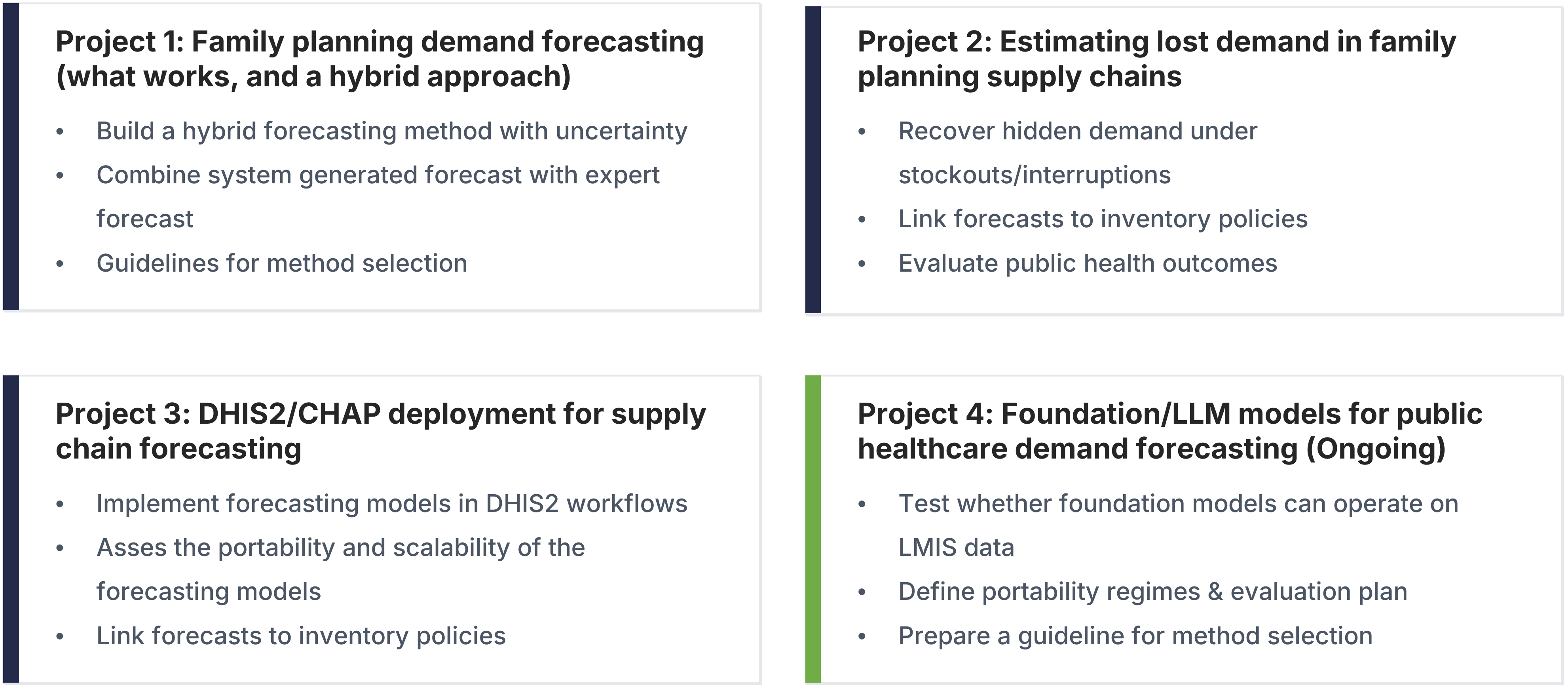
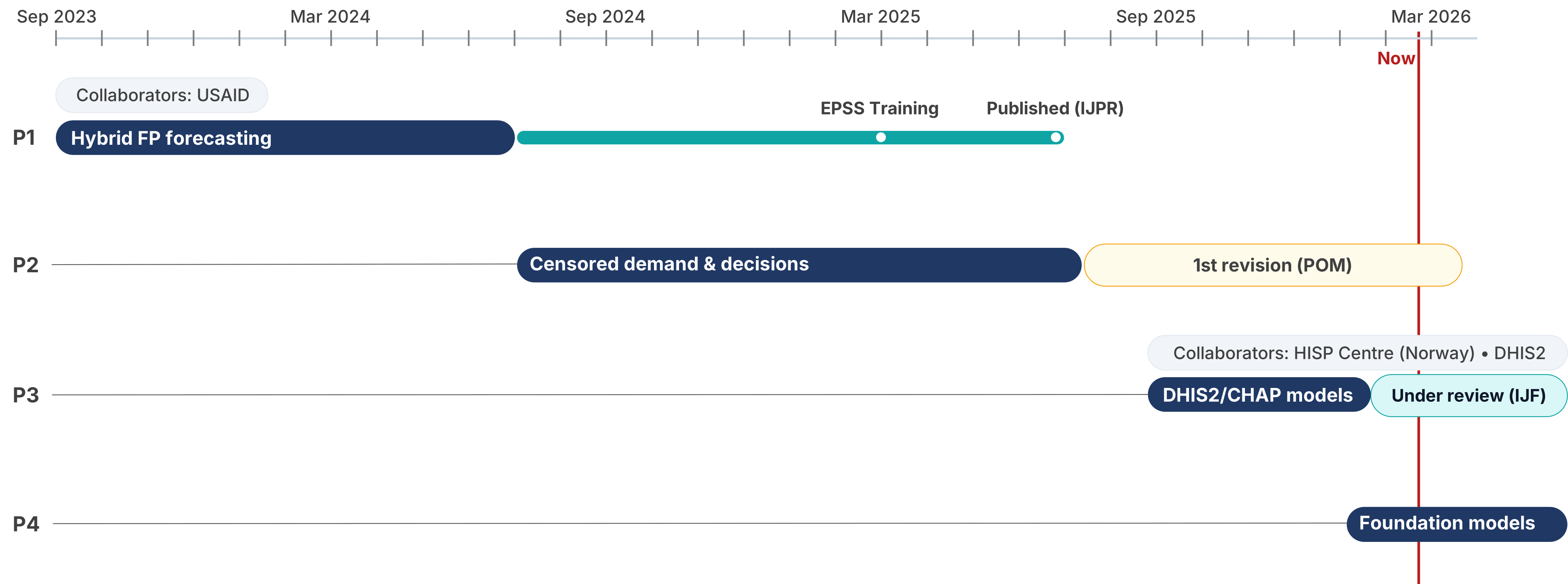
Projects timeline and progress
Blue colour bars indicate the timelines from project start to draft manuscript completion.

Project 01: Family planning demand forecasting
Problem
Stock decisions are risk-based, point forecasts are not enough
Real LMIS data are irregular and often short-history
Planners need a transparent adjustment mechanism to incorporate expert knowledge
What we built
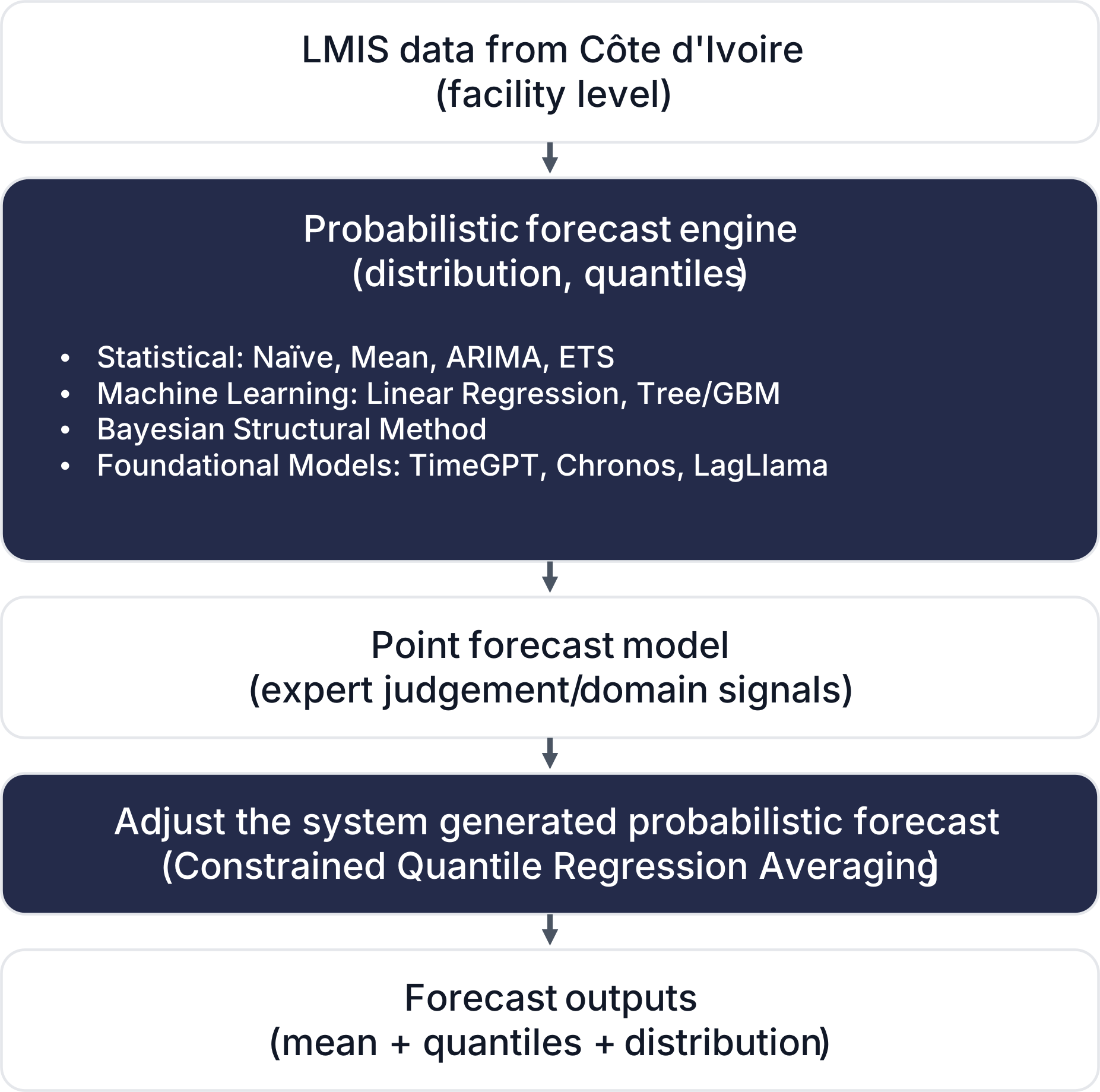
Hybrid approach: Combine probabilistic forecast with expert point forecast
Benchmark a wide range of forecasting methods for contraceptive forecasting
Project 01: Family planning demand forecasting
Outputs
Facility-level probabilistic forecasts (quantiles & intervals)
Hybrid method that balances accuracy and computational requirements
Guidance on when to use which method family
A hands-on training on demand forecasting for contraceptives
Key message
Use stable baselines by default; escalate to richer models selectively
Treat bias adjustment as a governance issue (who can override, when, and why)

Project 02: Demand forecasting with lost sales
Problem
Observed consumption underestimates true need when shelves are empty
Stockouts create partial censoring
Interruptions/closures create full censoring
Biased data → biased forecasts → under-ordering cycles
What we built
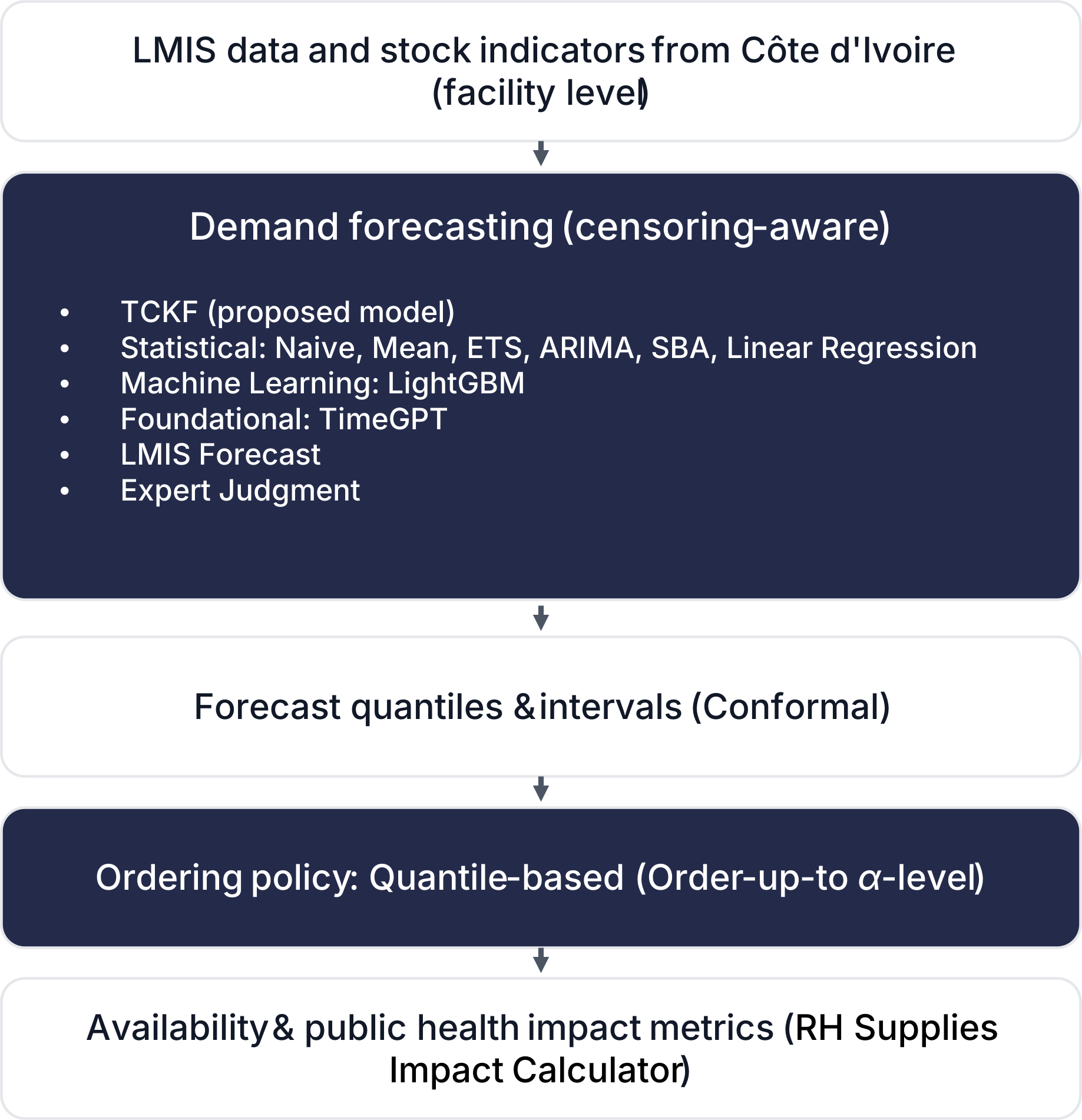
Truncated Conformal Kalman Filter (TCKF), forecasting method that adapts under lost sales
Prediction intervals suitable for decision rules (e.g., order-up-to policies)
Project 02: Demand forecasting with lost sales
Outputs
TCKF method for lost sales (stockouts and interruptions).
Prediction intervals via conformal prediction.
Integrated forecast and inventory pipeline linking accuracy to ordering decisions.
Public health translation from stock outcomes to program impact.
Key message
Stock data often hides need, so we must estimate “true demand,” not just forecast observed consumption.
Evaluate methods by decision impact (availability/ public health), not forecast scores alone.
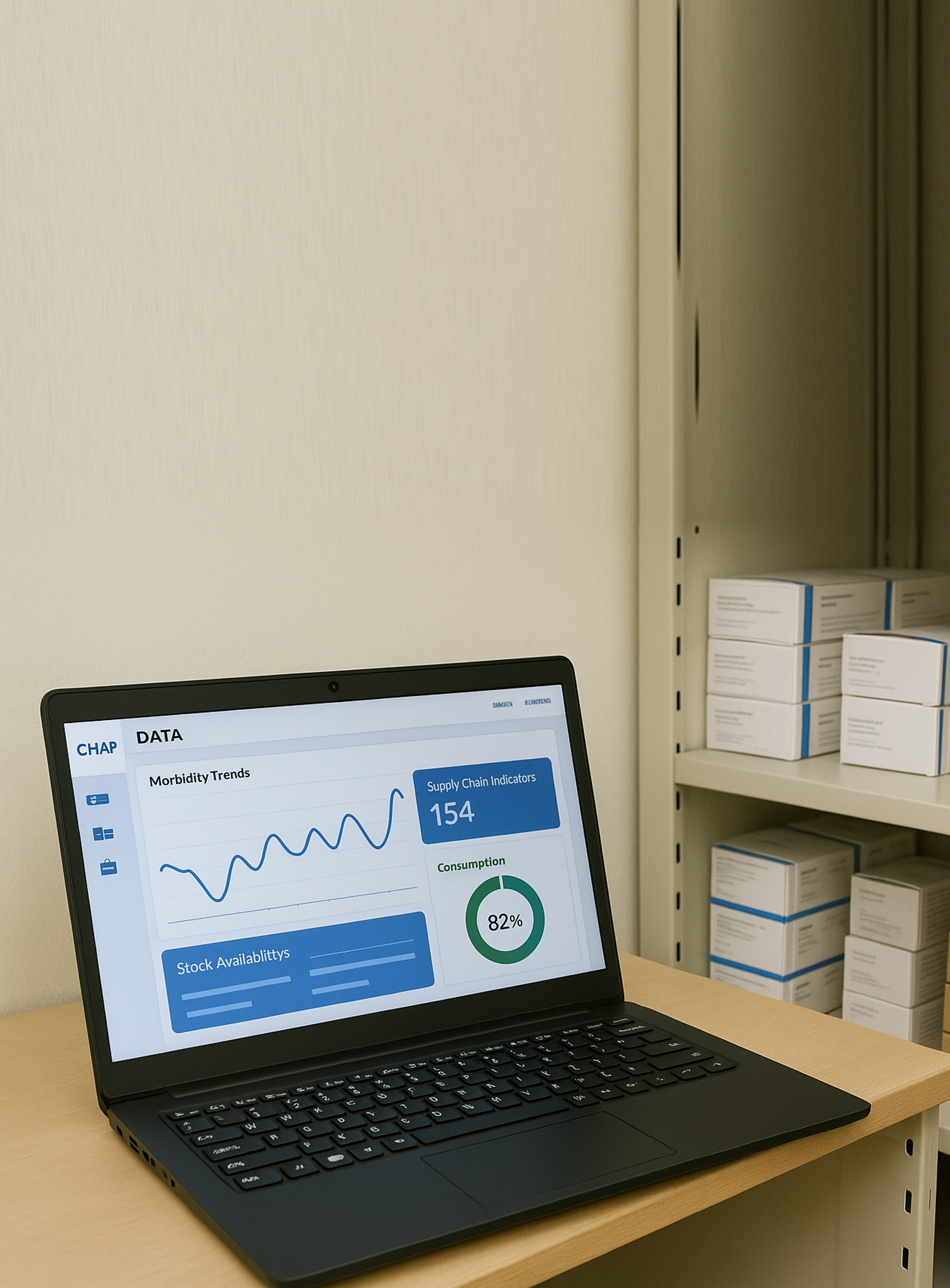
Project 3: DHIS2/CHAP deployment for supply chain forecasting
Problem
CHAP supports advanced probabilistic forecasting, mainly for morbidity use-cases
Supply chain forecasting is not routinely linked to inventory decisions in the same workflow
Facility-level planning needs low-burden tools that run unattended across many series
What we built
A model portability experiment inside the DHIS2/CHAP pipeline (cases → consumption)
A standard workflow that produces forecast objects (mean, quantiles, sample paths) and feeds an order-up-to inventory simulation
Project 3: DHIS2/CHAP deployment for supply chain forecasting
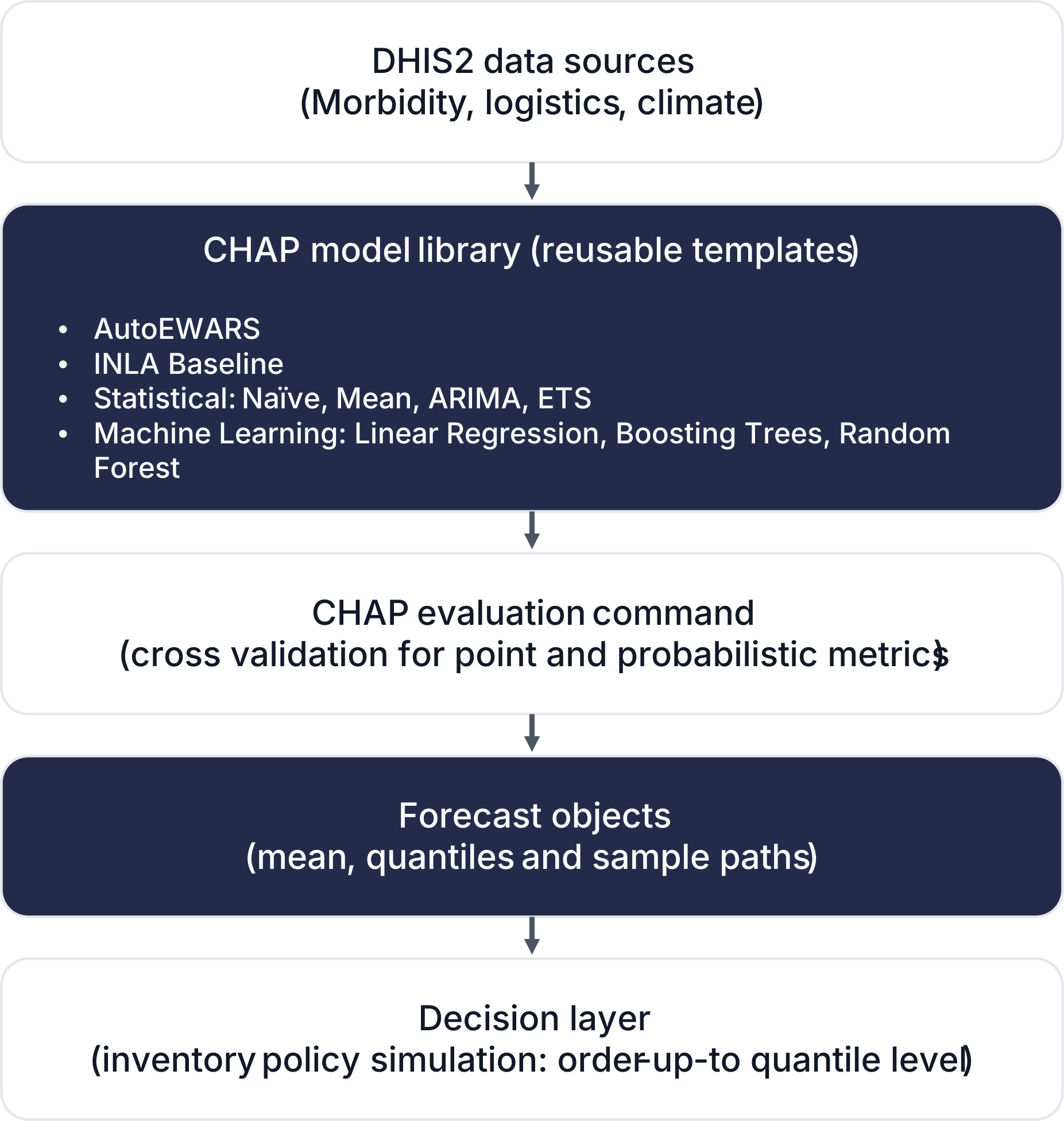
Outputs
Portability evidence across accuracy, uncertainty, runtime, and failure risk
A practical default set: Auto ARIMA / Auto ETS as stable, scalable baselines
A proposed end-to-end architecture and deployment steps
Key message
Reuse the platform at scale, but treat model choice as conditional (target structure and decision context).
Start with autonomous baselines; add complex models only where inputs and governance justify them.

Project 4: Foundation/LLM models for public healthcare demand forecasting
Problem
Foundational/ LLM models are trained on commercial-scale time series, but public health LMIS data are different
In LMIS we see intermittency, censoring, short histories, and data quality constraints
Their value for facility planning (zero-shot vs fine-tuned) is still unknown
What we built
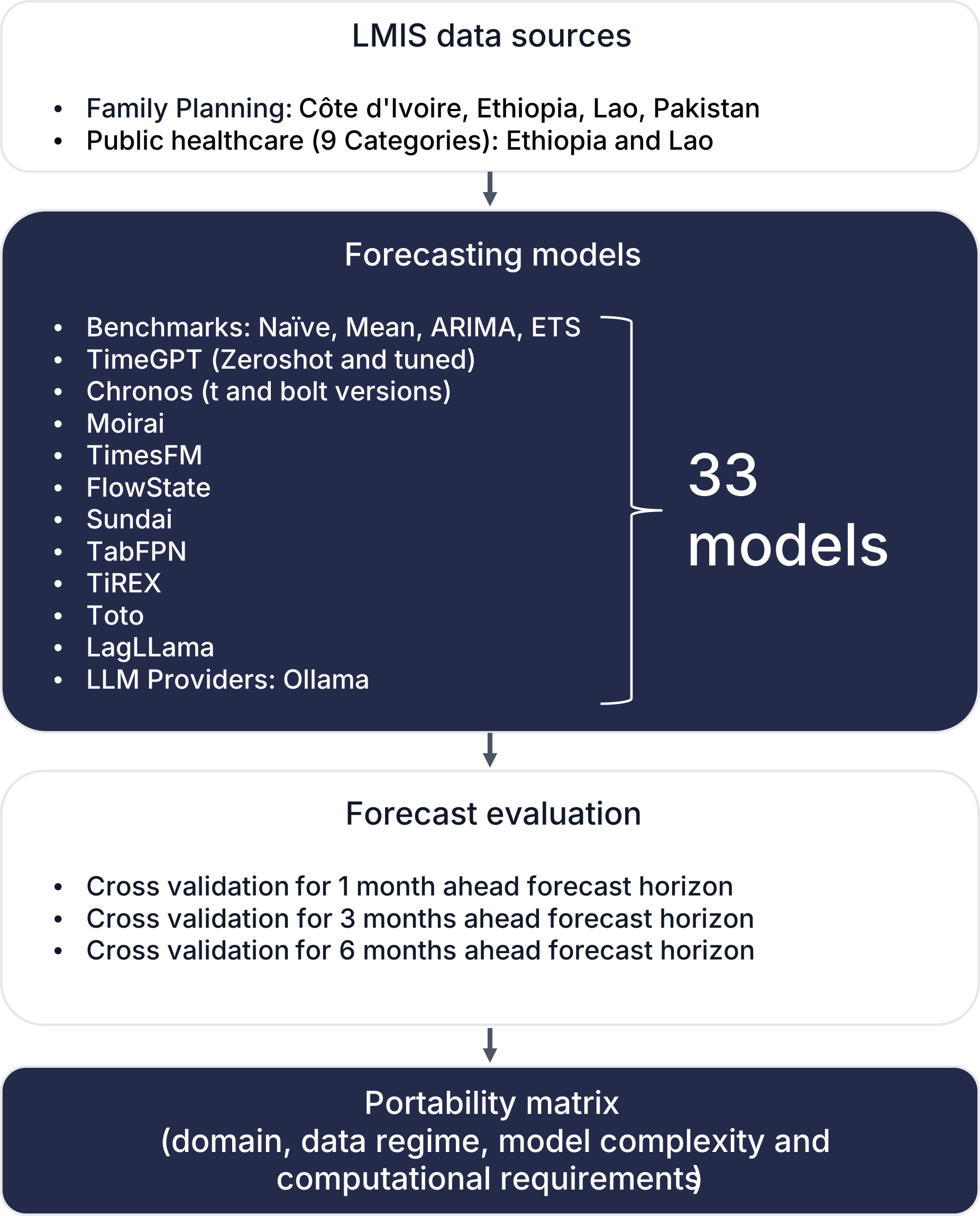
A controlled benchmark of foundation/LLM models vs strong statistical baselines on public health demand series
A Model Portability Matrix to explain when/why transfer works across domains, data regimes, and decision contexts
Project 4: Foundation/LLM models for public healthcare demand forecasting
Outputs
A portability matrix covering: domain, data regime, model complexity and computational requirements
Zero-shot vs fine-tuned results for models such as TimeGPT, Chronos, LagLlama, Moirai, TimesFM, etc
Practical guidance: “where foundation models help, where they don’t, and what to run instead”
Key message
- Treat foundation/LLM models as candidates, not defaults: test portability under LMIS realities before deployment.
Any questions or thoughts? 💬